
Everything About Pulasa — Telugu People's Most Prestigious River Fish
Origin | Migration | Culture | Myths | Nutrition and the complete truth about what makes Pulasa extraordinary — and rare.
The Origin of Pulasa
Pulasa is not just a fish. It is a 200-million-year-old story that begins in the sea, peaks in the monsoon river, and ends on the plate of a Telugu family.
Pulasa is the Telugu name for Hilsa (Tenualosa ilisha), a species belonging to the family Clupeidae — the herrings. Its evolutionary lineage dates back over 200 million years. The species thrives in the estuarine and coastal waters of the Bay of Bengal and is distributed across the Indian subcontinent, Bangladesh, Myanmar, and parts of Southeast Asia.
In India, Hilsa is known by many regional names. Bengalis call it Ilish — their most culturally prized fish. In Odisha it is Ilishi. In Kerala, it appears as Veloori. But in the Telugu states — Andhra Pradesh and Telangana — it is simply and reverently called Pulasa.
The Godavari river, flowing from the Western Ghats through Telangana and Andhra Pradesh into the Bay of Bengal, has historically been the most celebrated entry point for Hilsa into India. The specific section of the river near Rajamahendravaram (Rajahmundry) in East Godavari is where this fish enters to spawn — and it is here that the legend of Pulasa is born.
The word “Pulasa” itself is believed to derive from the Telugu root describing the fish’s unique silky texture during this monsoon season. For generations, Pulasa has been served at weddings, religious occasions, and as a symbol of hospitality and prosperity in Telugu households.
Scientific Profile
🡲 Species
Tenualosa ilisha (Hamilton, 1822)
🡲 Family
Clupeidae (Herrings & Sardines)
🡲 Distribution
Bay of Bengal, Indo-Pacific coast, major Indian rivers
🡲 Weight Range
500g – 3kg per fish (Godavari catch)
🡲 Season in Godavari
July – September (monsoon migration window)
🡲 Culinary Status
Nationally protected & culturally revered
Where Pulasa Migrates in India — and Why
The migration of Pulasa into the Godavari is one of nature’s most precise seasonal events. Understanding it explains everything about the fish’s extraordinary flavour and its scarcity.
Hilsa is an anadromous fish — it lives in saltwater but migrates to freshwater rivers to spawn. This migration is the defining event of Pulasa’s life cycle. It is triggered by monsoon freshwater flood conditions that lower salinity levels in river estuaries, signalling the fish to begin its upstream journey.
The primary migration route in India: Hilsa enters the Godavari from the Bay of Bengal at Antarvedi (the river mouth) and travels upstream through the delta system toward Rajamahendravaram and beyond, covering up to 1,200 km in some documented cases.
During this upstream journey, the fish draws heavily on its fat reserves — its metabolism shifts dramatically, and it stops feeding on external food. The body converts stored energy, and this process is what creates the extraordinary intramuscular fat deposits that give Pulasa its signature buttery, melt-in-the-mouth texture. The longer the upstream journey, the richer the fat content.
Fish caught near Rajamahendravaram and upstream are considered peak Pulasa — they have already completed a significant portion of their migration and have the highest fat content. Fish caught nearer to the sea mouth have lower fat content and are considered inferior.
Other major Indian rivers where Hilsa migrates include the Brahmaputra and Ganga (in Bengal/Bihar), the Mahanadi (Odisha), and the Hooghly. But the Godavari variant — entering during the peak of the monsoon into a specific river segment — carries a cultural and culinary reputation unmatched anywhere in India.
The Pulasa Migration Route
➤ Bay of Bengal — Pre-monsoon
Hilsa schools near Antarvedi mouth. Saline water, leaner fish.
➤ July — Migration Begins
Monsoon freshwater reduces estuary salinity. Migration signal triggered.
➤ Godavari Delta — Early Pulasa
Fish enters river. Fat accumulation begins. Moderate quality.
➤ Rajamahendravaram Zone — Peak Pulasa
Maximum intramuscular fat. Omega-3 peak. This is the legendary fish.
➤ September — Season Closes
Fish completes spawn. Returns to sea. 90-day window is shut.
Why Monsoon Makes It Special
The combination of warm freshwater influx, specific pH levels, and river current conditions during the Southwest Monsoon creates a precise environmental trigger. This is not just seasonal — it is a narrow 90-day window within a season. Even within July–September, the richest fish are found in August's peak monsoon weeks.
The Difference Between Pulasa and Hilsa
This is the most asked question in the entire Pulasa category. The honest, complete answer — explained once, clearly.
Biologically, Pulasa and Hilsa are identical — both are Tenualosa ilisha. The difference is entirely about geography, season, and the journey the fish has made.
Think of it this way: All Champagne is sparkling wine, but not all sparkling wine is Champagne. Similarly, all Godavari Pulasa is Hilsa — but not all Hilsa earns the name Pulasa.
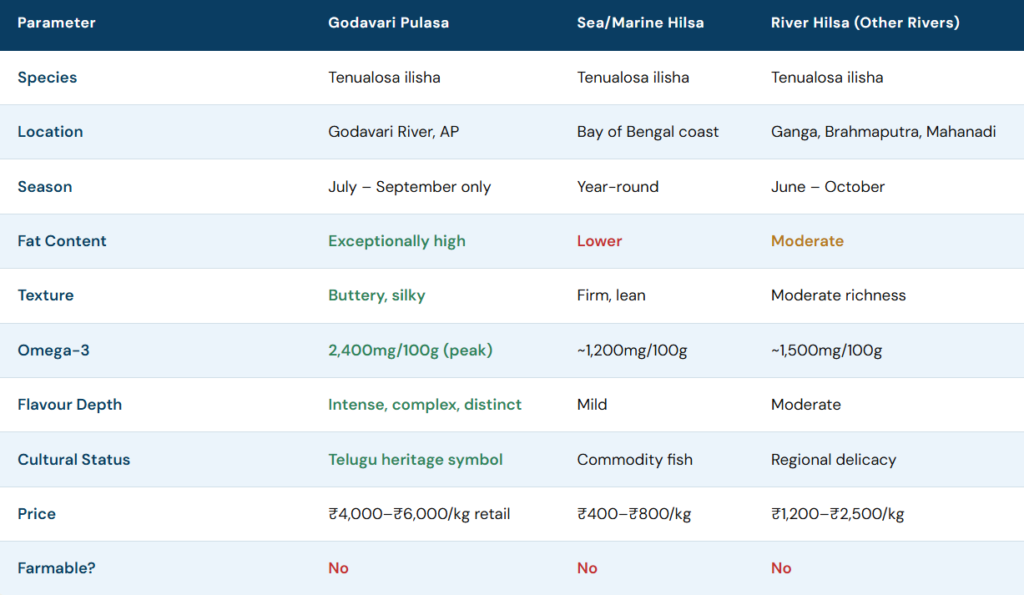
Pulasa Direct Transparency Statement
Pulasa Direct sources Pulasa (Tenualosa ilisha) — the same species as Godavari Pulasa — from verified riverine catches across India from godavari river. We do NOT source from the Godavari auction market. This allows us to offer authentic Pulasa at accessible prices (₹3499/kg) so more Telugu families can enjoy this tradition.
How to Find Genuine Pulasa vs Fake or Substitute Fish
The Pulasa season attracts large-scale fraud. Vendors sell sea Hilsa, marine catfish, or even farmed basa as “Pulasa” during July–September. Here is how to protect yourself.
Body Shape & Scales
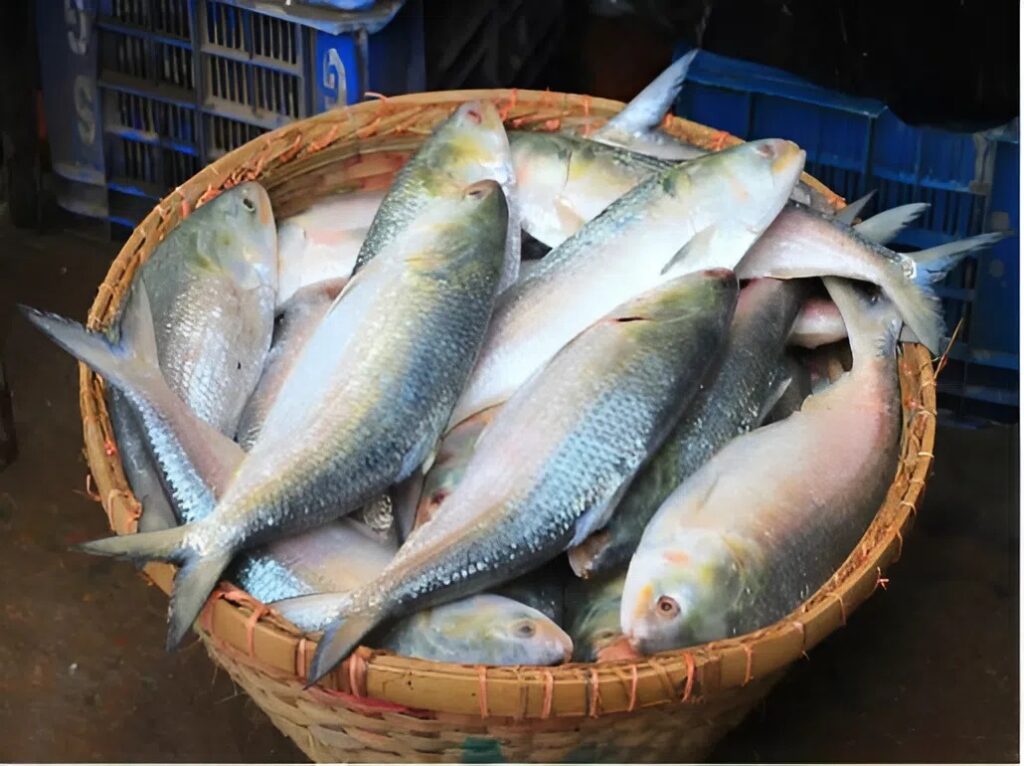
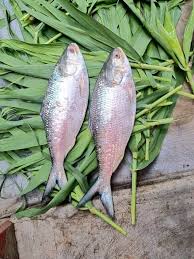
Original Pulasa (Hilsa) has a naturally compressed, deep-bodied oval structure with a slightly curved belly. The body feels soft yet firm because of its natural oil-rich flesh. Unlike many substitute fishes, Pulasa has a smoother flowing body profile with a noticeable silver shine that changes slightly under light.
Signature Y-Shaped Bones
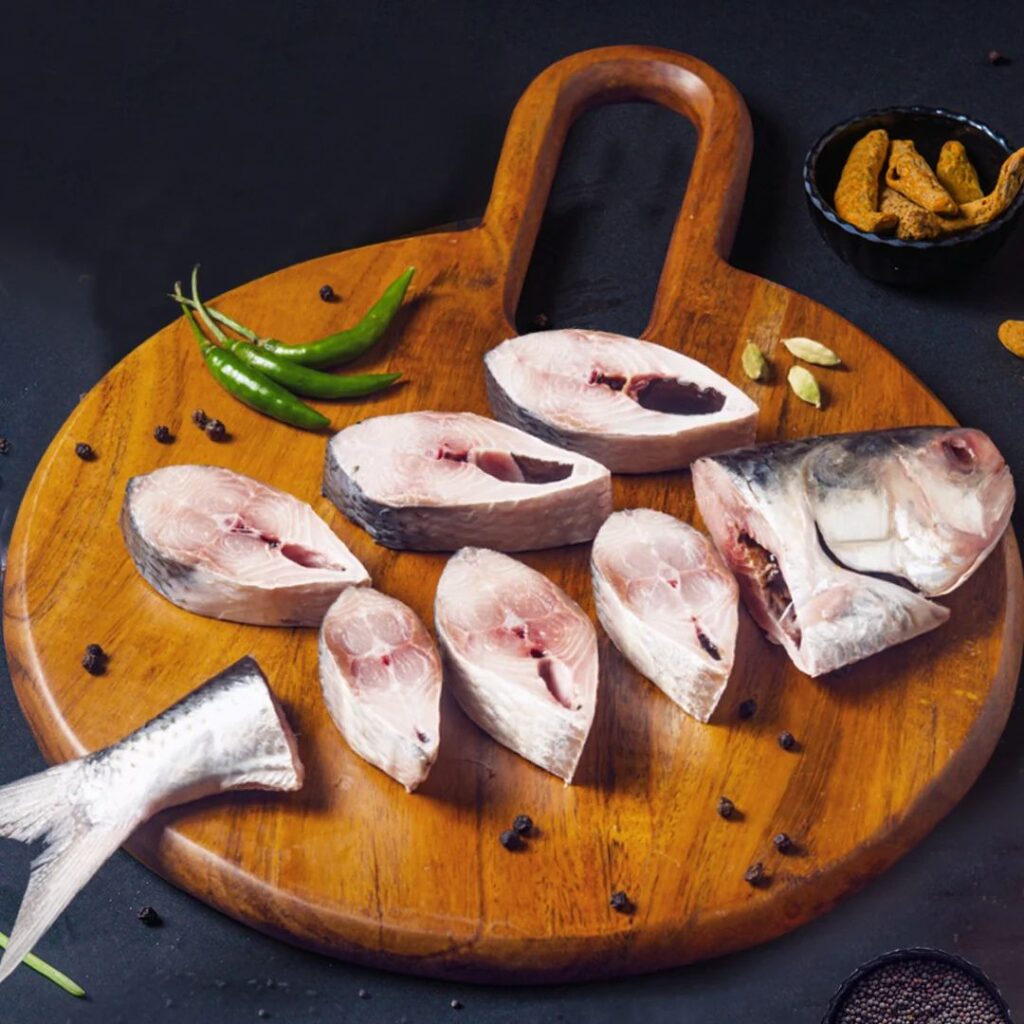
Pulasa is scientifically known for its fine Y-shaped intermuscular bones running throughout the flesh. These bones are thin, evenly distributed, and are one of the key identifiers of genuine Hilsa/Pulasa. Boneless flesh or simple straight pin bones usually indicate substitute species.
Silver Skin & Color Gradient
Fresh Pulasa has a unique metallic silver appearance with subtle blue-grey gradients along the upper body and dorsal region. There will be a Pinkish broder oval line from head to tail. The lower belly appears brighter silver-white, while the back carries a slightly darker bluish tone. Genuine Pulasa reflects light strongly because of its oily skin layer, giving it a glossy appearance even before cleaning.
Signature Natural Flesh Pattern
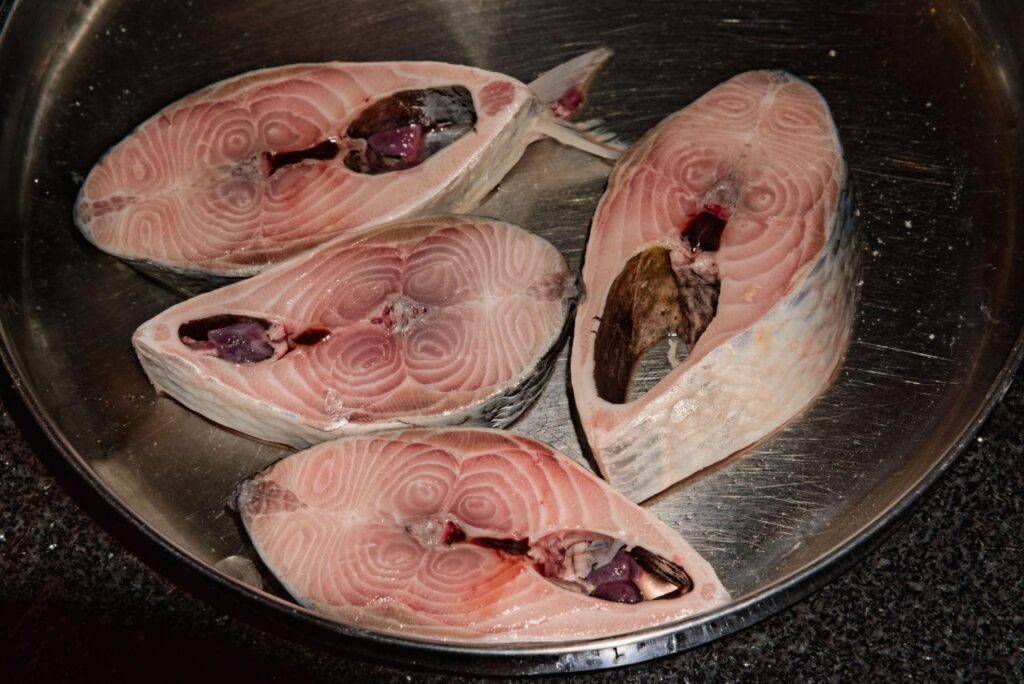
One of the most recognizable characteristics of genuine Pulasa is its naturally layered circular flesh pattern visible after cutting. These flowing ring-like muscle textures are formed due to the fish’s rich oil content and dense muscle structure, giving Pulasa its signature buttery texture and premium cooking quality. Unlike lean fishes, Pulasa develops soft marbled flesh with visible fat distribution throughout the cuts.
Flesh Texture & Oil Content
One of the strongest characteristics of Pulasa is its naturally oil-rich flesh. When cut, the meat appears slightly creamy-white rather than dry white. The texture feels buttery, soft, and layered with visible fat lines spread inside the flesh. This oiliness is what creates the rich taste Pulasa is known for. Unlike lean fishes, genuine Pulasa flesh should never feel dry or rubbery.
Belly Thickness & Richness
Premium Pulasa usually has a fuller belly portion because of its high fat concentration and Breading ready tummy. The belly cuts are considered the richest and most flavourful part of the fish, especially during peak monsoon season.
Want guaranteed genuine Pulasa?
Pulasa Direct is the only brand which sells original Godavari Pulasa. With affordable cost for telugu People.
What is Pulasa Direct's Pulasa Variant?
We believe every Telugu family deserves real Pulasa — not just families who can afford ₹5,000–₹6,000/kg at the Godavari auction market. Here is exactly what we source, how, and why.
Pulasa Direct sources Godavari River Pulasa — the exact same species as Original Pulasa — from verified riverine catches at other Indian Godavari river systems. These rivers share similar ecological conditions with the Godavari during the monsoon, producing Hilsa with comparable fat profiles and flavour characteristics.
Why not Godavari auction market? Godavari Pulasa from the Rajamahendravaram/Yanam auction market reaches prices of ₹25,000–₹50,000 per fish. After adding cold chain, processing, packaging, and delivery margins, retail pricing would be ₹7,000–₹12,000/kg — out of reach for most families. We made the conscious choice to work with an alternative verified Pulasa so we can price at ₹3,500/kg — accessible to every Telugu household.
What does lab verification confirm?
Species DNA match to Tenualosa ilisha (COI barcode — NABL accredited)
We are completely transparent about this. We do not claim to be selling Godavari auction fish. We claim to be selling the same species, with the same nutritional profile, at honest prices, with better traceability than any market vendor offers.
Whole Pulasa Fish
For those who want it authentic, untouched, and traditional.
Cleaned, scaled, and packed — no cuts, just pure Pulasa.
Sizes: 0.8–1 KG | 1.3–1.5 KG | 1.8–2 KG
Starting from 2999/-
Curry Cuts Pulasa Fish
For those who want tradition with convenience.
Cleaned, scaled, and perfectly cut — ready to go straight into the pan.
Sizes: 0.8–1 KG | 1.3–1.5 KG | 1.8–2 KG
Starting from 2999/-
Pulasa Curry (Ready to Eat)
For those who don’t want to wait.
Fully cooked, rich, and authentic — just open and experience Pulasa instantly.
Portions: 5 Pieces | 10 Pieces
Starting from 1999/-
Myths About Pulasa — Busted
The Pulasa market is full of half-truths spread by vendors, middlemen, and uninformed buyers. Here is the truth on the most common myths.
MYTH: All Hilsa sold in July–September is Pulasa.
FACT: Sea Hilsa (caught in the ocean, never entered a river) is sold year-round. Vendors knowingly sell sea Hilsa as “Pulasa” during monsoon season to exploit the premium. True monsoon river Hilsa has 2–3x higher fat content. Only DNA testing or direct supply-chain verification can confirm origin. Always ask for a lab report.
MYTH: Pulasa can be farmed — the market supply is not actually limited.
FACT: Pulasa is one of the very few commercially significant fish species that has resisted all farming attempts. Its complex anadromous migration biology, specific spawning triggers, and hormonal requirements during the river phase cannot be replicated in captivity. Global research institutions including ICAR and FAO have documented repeated failed aquaculture attempts. Every Pulasa is 100% wild-caught.
MYTH: Larger Pulasa is always better quality Pulasa.
FACT: Size does not determine quality in Pulasa. A 700g fish caught deep in the river at peak monsoon will have better fat content and flavour than a 2kg fish caught near the sea mouth. What matters is river entry point, how far upstream it was caught, and the point in the season. Fat distribution and flesh texture — not weight — determine quality.
MYTH: Frozen Pulasa is inferior — only fresh Pulasa is worth buying.
FACT: Properly frozen Pulasa (at -18°C or below within 2 hours of catch) retains over 95% of its flavour, texture, and nutritional profile. The very high fat content of Pulasa is protective — fat-rich fish freeze and thaw better than lean fish. The problem is not freezing — it is improper freezing (freeze-thaw cycles, poor packaging, temperature breaks). A properly frozen and cold-chain-maintained Pulasa is indistinguishable from fresh after cooking.
MYTH: Pulasa from non-Godavari rivers is a fake or inferior product.
FACT: The species Tenualosa ilisha migrates into multiple Indian rivers including the Brahmaputra, Mahanadi, and Hooghly. Fish from these rivers are the same species, undergo the same fat-accumulating monsoon migration, and carry comparable nutritional profiles. What is unique to Godavari is not the species — it is the cultural history and the specific auction dynamics. DNA testing is the definitive test — not geography claims from vendors.
MYTH: The bones in Pulasa are a problem — it's too difficult to eat.
FACT: Pulasa’s Y-shaped intermuscular bones are fine and soften when cooked in traditional style — especially in Pulusu (tamarind gravy) where slow cooking dissolves them. These bones are actually a quality marker — they confirm genuine Hilsa species. Expert cooks and experienced Telugu households consider navigating the bones part of the Pulasa eating ritual. Our Curry Ready Pack is pre-cut to make this easier for first-time buyers.
MYTH: Pulasa is only hype created by vendors.
FACT: No product maintains generational demand purely through hype. Pulasa became legendary because of its naturally rich flavour, oil-heavy flesh, seasonal rarity, and emotional connection among Telugu families. Long before social media existed, people waited entire seasons for Pulasa availability. The demand was built over decades through actual eating experience, not internet marketing.
MYTH: Pulasa is only for wealthy buyers.
FACT: Auction headlines created the impression that Pulasa is unreachable for regular consumers. In reality, organized sourcing and direct distribution help reduce multiple middle layers that traditionally inflated prices. While Pulasa remains a premium seasonal product, better supply-chain management makes it more accessible than many people assume.
MYTH: If Pulasa price is not ₹30,000+, it is fake.
FACT: The viral auction stories showing Pulasa selling for ₹30,000 or even higher usually involve extremely rare ceremonial first catches or media-driven bidding situations. That is not how the regular consumer market operates. Genuine Pulasa pricing depends on season timing, fat richness, fish size, migration stage, and daily availability. The reality is that authentic Pulasa has always existed beyond auction headlines, but the market visibility around those rare bids created a perception that every genuine Pulasa must cost extremely high. Premium quality matters more than hype pricing.
MYTH: Online Pulasa cannot be trusted.
FACT: Traditionally, most people purchased Pulasa through local markets without ever knowing the actual source, handling conditions, or supply chain behind the fish. Customers simply trusted the vendor’s word. A structured online system actually creates more transparency because sourcing, packing, cold-chain handling, and delivery are organized and traceable. The issue is not whether the fish is sold online or offline — the real issue is how responsibly the supply chain is maintained.
MYTH: Packed and cleaned Pulasa loses its original taste.
FACT: Pulasa loses quality only when it is handled poorly. Professionally cleaned and temperature-controlled Pulasa retains its natural oil content, flavour, and texture extremely well. In fact, hygienically packed fish often maintains freshness better than fish exposed for hours in open markets. The rich buttery flavour of Pulasa comes from its internal fat distribution, not from whether it was cleaned in front of the customer.
MYTH: Frozen Pulasa means old stock or bad quality.
FACT: Pulasa is naturally rich in oils and fat, which actually helps preserve flavour during proper freezing. When frozen quickly under controlled temperatures immediately after sourcing, Pulasa retains almost the same cooking texture, aroma, and taste profile. The real problem is not freezing itself — it is poor storage, repeated thawing, or broken cold-chain handling. A properly maintained frozen Pulasa can taste almost identical to fresh after cooking.
MYTH: Only fish caught in Godavari is real Pulasa.
FACT: Pulasa/Hilsa is a migratory species scientifically known as Tenualosa ilisha. It appears across multiple river systems in the Indian subcontinent. What makes Godavari Pulasa famous is its strong cultural connection, regional demand, and historical market reputation among Telugu households. Authenticity is determined by species characteristics, fat quality, and migration stage — not by marketing claims alone.
MYTH: Bigger Pulasa always tastes better.
FACT: The quality of Pulasa is not decided by weight alone. Many experienced buyers actually prefer medium-sized Pulasa because of its balanced fat distribution and softer flesh texture. A smaller fish caught deeper upstream during peak migration can often taste far richer than a much larger fish caught earlier near coastal regions. Texture, oil richness, and season timing matter far more than sheer size.
MYTH: If Pulasa is easily available online, it cannot be genuine.
FACT: For years, access to Pulasa was controlled through local auctions, market relationships, and middlemen systems. A digital platform does not change the fish — it simply organizes the supply chain better. Structured sourcing, direct procurement, and modern logistics now make it possible for customers to access Pulasa more conveniently without depending entirely on traditional market systems.
MYTH: Fresh market fish is always superior to packed fish.
FACT: Open market fish often undergoes inconsistent ice handling, repeated touching, and exposure to changing temperatures for several hours. Professionally packed Pulasa handled under controlled cold-chain conditions can actually maintain freshness and hygiene more consistently than many traditional market environments. Quality depends on handling standards, not on whether the fish is sold openly or packed.
Why Telugu People Are Most Admired for Their Love of Pulasa
No community in India celebrates a single fish the way Telugu people celebrate Pulasa during the monsoon. This is not just food culture — it is identity.
In Telugu households, the first Pulasa of the season is an event. Families plan for it, budget for it, and share it with relatives. In some families it is a ritual — the first cook of the season is the grandmother or eldest woman of the house. Children are told stories about Pulasa. Elderly relatives talk about the Pulasa of decades past.
The reason for this depth of cultural connection is multi-layered:
1. Geographic Intimacy. The Godavari is the soul river of Telugu culture — it flows through the heart of Andhra Pradesh, through areas where millions of Telugu families have lived for generations. Pulasa entering the Godavari is not an abstract event — it is personal. “Our river’s fish” is a powerful identity.
2. Scarcity Creates Ceremony. Because Pulasa is available only 90 days a year and cannot be farmed, each season’s catch is a limited, precious resource. Cultures across the world create rituals around scarce, seasonal foods. Pulasa in Telugu culture serves this function — it marks the monsoon, marks the season, and marks the year.
3. Exceptional Flavour Memory. Once you have eaten properly prepared Pulasa Pulusu — the traditional tamarind-based Godavari-style curry — the flavour becomes a reference point. People describe tasting Pulasa years later and being transported back to a grandmother’s kitchen. This flavour memory is cultural cement.
4. Social Currency. Gifting Pulasa has historically been a gesture of high respect — to elders, to important guests, to people you want to honour. This social function elevated Pulasa beyond mere food into a status symbol and a vehicle for relationships.
5. The Difficulty Makes It Precious. The bones, the seasonal window, the price — all of these make Pulasa an earned pleasure. A meal that requires effort, planning, and investment feels more meaningful than convenience food. Telugu food culture has always honoured the difficult and the exceptional.
5 Reasons Pulasa is Cultural Identity
➤ The Godavari Connection
Pulasa enters the river most sacred to Telugu people. It is home.
➤ Season as Ceremony
90-day scarcity creates anticipation that no year-round fish can match.
➤ Flavour Memory
One meal of Pulasa Pulusu becomes a lifelong reference for flavour.
➤ Gift of Respect
No gift says "I honour you" in Telugu culture more than sending Pulasa.
➤ Generational Tradition
Grandmothers who cooked it. Mothers who learned. Children who remember.
The Monsoon Ritual
In East Godavari and Krishna districts, the first heavy monsoon rain is called "Aaraatri Vana" — and families actively track the Pulasa arrival news from fishermen. WhatsApp groups, Facebook pages, and local news all carry "Pulasa lo vacchindi" (Pulasa has entered the river) updates as community news.
Telugu Proverbs About Pulasa — Prestige Preserved in Language
Popular Telugu Proverbs, Sayings & Expressions About Pulasa
These are the kinds of lines Telugu households, elders, vendors, and food lovers commonly use around Pulasa culture and emotion
“పుస్తెలు అమ్మినా సరే పులస చేప తినాలి.”
“Pusthelu ammina sare Pulasa chepa thināli.”
Even if you have to sell your valuables, Pulasa is worth experiencing once.
“పులస రుచి చూసిన వాడికి ఇంకో చేప రుచి కాదు.”
“Pulasa ruchi chusina vaadiki inko chepa ruchi kaadhu.”
Once you taste Pulasa, ordinary fish no longer satisfies.
“గోదావరి వరదొస్తే పులస వస్తుంది.”
“Godavari varadosthe Pulasa vasthundi.”
Pulasa arrives with the Godavari floods — symbolizing the monsoon season.
“పులస కాలం అంటే గోదావరి జాతర.”
“Pulasa kaalam ante Godavari jaathara.”
Pulasa season itself feels like a festival in Godavari regions.
“ఒక పులస చేప పెడితే పని అయిపోతుంది.”
“Oka Pulasa chepa pedite pani aipothundi.”
A Pulasa gift is enough to get work done.
“పులస పంపించాడంటే చాలా గౌరవం ఇచ్చినట్టే.”
“Pulasa pampinchadante chala gauravam ichinatte.”
Sending Pulasa is considered a high-respect gesture.
“పులస వెళ్తే సంబంధాలు బలపడతాయి.”
“Pulasa velthe sambandhalu balapadathayi.”
Pulasa gifting strengthens relationships.
“గోదావరిలో పులసంటే గిఫ్ట్ కాదు, స్టేటస్.”
“Godavarilo Pulasa ante gift kaadhu, status.”
In Godavari culture, Pulasa is not just a gift — it’s status.
Why Pulasa is Auctioned at ₹25,000–₹50,000 Per Fish
Every July, the Rajamahendravaram fish market makes national news. Single Pulasa fish are sold for ₹25,000, ₹35,000 — sometimes crossing ₹50,000. Here is the complete explanation of what is really happening.
The Rajamahendravaram/Yannam Inland Fish Auction is where the first and finest catches of the Pulasa season are sold. This is not a normal fish market transaction — it is a prestige auction where multiple factors converge to create extraordinary prices.
The “First Fish of Season” Premium
The absolute highest prices are commanded by the very first Pulasa of the season — the fish caught on or just after July 1st. This is the culturally celebrated “Aadya Pulasa” (First Pulasa). Hotels, caterers, wealthy families, and business owners compete to be the first to serve or gift Pulasa of the new season. This status competition alone drives opening bids into the ₹20,000+ range for a single fish.
Media Amplification Creates a Bidding Spiral
Every year, Telugu media — TV news channels, YouTube channels, Facebook pages — cover the Rajamahendravaram Pulasa auction as breaking news. Reporters interview bidders. Prices are announced live. This media attention creates a self-reinforcing prestige auction: being the highest bidder becomes public, visible, and socially valuable. Businesspeople and politicians use high-price Pulasa purchases as public statements of affluence and cultural pride.
The Restaurant Status Game
In cities like Hyderabad, Vijayawada, and Vizag, upscale Telugu restaurants compete to be the first to serve fresh Pulasa of the season. A restaurant that can advertise “We have the first Pulasa of 2025” commands full bookings for weeks. The cost of acquiring that early-season fish at auction — even ₹40,000 for a single 1.5kg fish — is worth it as marketing and status positioning. Their customers are paying ₹2,000–₹3,000 per plate and it still sells out.
Supply Math at the Auction Level
On the first day of the season, total supply at the Rajamahendravaram auction might be 20–30 fish. Buyers present could be 50–100 — hotels, caterers, wealthy individuals, exporters, media buyers, trophy hunters. When 100 bidders compete for 25 fish, and many of those bidders are emotionally driven rather than economically rational, prices will spike far beyond any cost-based justification.
The Export Premium
Hilsa is the national fish of Bangladesh and is deeply prized there. Premium Hilsa from India is exported to Bangladesh, the UK (for Bangladeshi diaspora), and parts of the Middle East at high prices. This export demand creates a floor price for large, premium fish that competes with domestic buyers.
Why Auction Prices Spike
➤ Media Event Effect
National news coverage turns buying into public prestige performance
➤ "First Pulasa" Status
Being first buyer of the season carries extreme social prestige
➤ Restaurant Competition
Top hotels pay premium to advertise "First Pulasa of 2026"
➤ Export Buyers
Bangladesh, UK diaspora, and Gulf compete with Indian buyers
➤ Demand:Supply Ratio
100+ bidders for 20–30 fish on opening day. Pure scarcity economics
What This Means for You
Auction prices of ₹25,000–₹50,000 are for the prestige economy — status, media, hospitality. The same species of Pulasa, same DNA, same nutritional profile, from Pulasa Direct is available at ₹3,500/kg — because we skip the auction, the prestige theatre, and the multiple middlemen.
Same fish. Verified. ₹3,500/kg — No auction needed.
DNA-certified Tenualosa ilisha. FSSAI licensed. Delivered to your door during the 90-day season.
Nutritional Facts of Pulasa
Beyond the taste and the culture, Pulasa is one of the most nutritionally dense fish available in India. Here is the complete science behind what you are eating.
217
kcalCalories
19 grms
per 100g Protein
12g
per 100g Total Fat
2,400
mg per 100g Omega-3
1,200
mg per 100g DHA
800
mg per 100g EPA
High
natural source Vitamin D
Rich
natural source Iodine
Cardiovascular protection — DHA reduces triglycerides and blood pressure
Anti-inflammatory — high EPA content reduces systemic inflammation
Thyroid function — natural iodine supports thyroid hormone synthesis
Eye health — DHA is a structural component of the retina
Brain development — DHA is critical for neural function and cognitive health
Bone health — Vitamin D supports calcium absorption and bone density
Complete protein — all 9 essential amino acids present in bioavailable form
Prenatal nutrition — Omega-3 supports foetal brain and retinal development
Omega-3 Context: A 100g serving of monsoon Pulasa delivers 2,400mg of Omega-3 — this exceeds the standard daily recommended intake for adults (1,600mg for men, 1,100mg for women per the National Academy of Medicine). Two servings per week from Pulasa fully meets Omega-3 requirements from food sources alone, without supplements.
Comparison with common fish: Salmon provides ~2,200mg Omega-3 per 100g (farmed Atlantic). Sardines provide ~1,480mg. Tuna (canned) provides ~300mg. Monsoon Pulasa competes with or exceeds premium cold-water fish in Omega-3 density — at a fraction of the import cost.
Note for Specific Health Conditions
While Pulasa is extraordinarily nutritious, people on blood-thinning medications (warfarin, aspirin), or those with specific fish allergies, should consult their physician regarding high-Omega-3 fish consumption frequency. Pregnant women benefit from the DHA content but should follow their doctor's advice on mercury levels in oily fish (Hilsa is classified as lower-mercury compared to tuna and swordfish).
FAQ — Everything About Pulasa Direct
Every question we have ever been asked — answered completely, honestly, and without marketing fluff.